How Family Recipes Change When They Travel
Learn how a family recipe changes as it travels, while clear notes on ingredients, technique, and meaning help preserve its roots and guide adaptation.
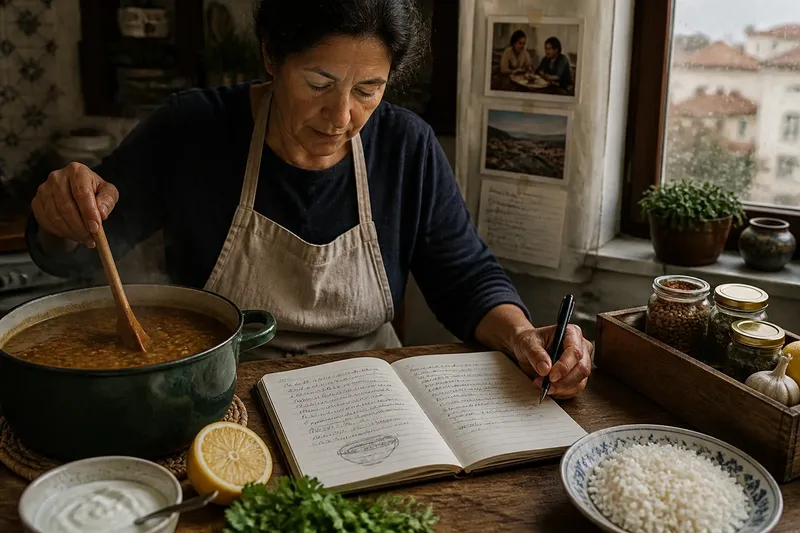
A family recipe changes as soon as it leaves the kitchen where its ingredients, tools, and customs are familiar. Writing down those conditions helps the next cook adapt the dish without mistaking one household’s version for the only authentic one.
A recipe can travel through migration, friendship, a handwritten card, or a shared meal. In each new setting, cooks interpret it through what they can find and what they expect food to taste like. A useful record names the original practice, explains the choices behind it, and makes later changes visible.
Record the recipe’s starting point before adapting it
Identify whose version you are documenting, where it belongs in a meal, and which ingredients or techniques give it its character. A family name or nickname may carry affection, but a newcomer also needs a plain description of the dish and its role, such as a side served with stewed vegetables or a filling for flatbread.
Describe the version rather than claiming to speak for an entire culture or family. “Mara’s version uses toasted cumin and is served with yogurt” leaves room for other cooks to do things differently. If the recipe changes by season, region, or household, record that variation instead of smoothing it into a single standard.
Note the circumstances that shape the original method: the kind of pan, the form of an ingredient, or an accompaniment that balances the dish. These details help a later cook understand whether a change is practical or alters the flavor and texture the original cook intended.
Explain ingredients as they move between places
Ingredient names do not always point to the same product in every market. Clarify whether a recipe calls for fresh or canned tomatoes, whole or ground spices, or unsweetened yogurt. If a familiar ingredient is hard to find elsewhere, describe its role—such as providing sourness, heat, or a soft texture—before suggesting a substitute.
Distinguish an equivalent from an adaptation. A substitute may perform a similar job without producing the same taste. Keep the original ingredient in the record, then explain what the alternative is expected to change so the new cook can make an informed choice.
Household measures also travel poorly. “A handful” may describe a familiar gesture rather than a fixed amount. Preserve that phrase if it conveys the cook’s voice, but add a usable quantity only when the cook can establish one; otherwise, describe how the ingredient should look in the mixture and when to adjust it.
Describe technique without turning judgment into false precision
Instructions such as “cook until ready” often rely on familiar sights, smells, and sounds. Replace shorthand with observable cues: onions soften and smell sweet, or a sauce thickens enough to leave a brief trail when a spoon crosses it. Pair a time estimate with those cues when useful, but let the food’s condition guide the next action.
Explain techniques that may not be familiar to a new cook. If the original instruction says to “sweat” onions, clarify that they should soften gently without much browning. If the recipe uses a mortar and pestle, say what the grinding accomplishes and identify an alternative tool only when it gives a workable result.
Say you are recording a lentil stew from a relative’s kitchen, where the cook adds lemon after simmering and serves it with rice. The written version names the lentils and their form, describes the simmering cue as tender lentils that still hold their shape, and identifies lemon as the final sour note. If a cook in a place without fresh lemons uses vinegar instead, the record marks that as an adaptation: it supplies acidity, but may give the stew a different aroma.
Keep the original method distinct from later versions
When a recipe changes, document what changed and why. A cook might use a locally available bean, alter the heat to suit the diners, or replace a tool that is absent. Keeping the original method beside the new choice makes the path of adaptation understandable rather than presenting the result as unchanged.
Separate defining features from preferences where the cook can explain the difference. “This version adds vinegar before serving; use less for a milder result” tells the reader what the recorded cook does and what the adjustment may change. Avoid declaring a detail essential unless the cook identifies it as part of the dish’s character.
For disagreements, record distinct versions instead of combining incompatible methods. One cook may brown onions deeply while another stops when they turn golden. Naming both choices lets a reader follow a coherent version and see how technique can shift the finished dish.
Use these observations to decide what to preserve or adapt
- Check whether the ingredient’s form matches the recorded recipe; if it does, follow the original instruction, but if it does not, describe the available form and decide whether to find the original or mark a substitution.
- Check whether the recipe names the ingredient’s role; if the role is clear, compare alternatives by that quality, but if it is missing, ask the cook before choosing a replacement.
- Check whether a measure comes from a known quantity; if it does, record that quantity, but if it is a gesture such as “a handful,” preserve the phrase and use a visual cue rather than inventing precision.
- Check whether a technique depends on a specific tool; if the tool is available, use it, but if it is not, choose an alternative only when it can produce the described texture or preparation.
- Check whether the sensory cue is observable to a newcomer; if it is, connect it to the next action, but if it is not, ask the cook for a clearer sign such as a change in color, smell, or texture.
- Check whether a proposed change affects flavor, texture, or serving context; if the effect is understood, label it as an adaptation, but if it is unclear, keep it separate from the recorded version until the cook can explain it.
Which questions help explain a recipe’s journey?
How do I adapt a recipe when an ingredient is unavailable?
First identify what the ingredient contributes, then choose an alternative for that function and note the expected difference. If the substitute changes the dish’s defining flavor or texture, describe the result as a new version rather than an identical one.
Should I convert every household measure?
Convert a measure only when the cook can provide a meaningful quantity. For a taste-based addition, preserve the original wording and add an observable cue, such as tasting for brightness or watching for a thicker sauce.
How can I write about authenticity without claiming one true version?
Name the cook, household, or place connected to the recipe and describe the version recorded. Acknowledge known variations instead of treating one account as representative of every cook who shares a broader tradition.
What context should travel with the recipe?
Include context that changes how someone prepares, serves, or interprets the dish, such as its place in a meal or the reason for a particular seasoning. Keep longer family memories in a separate note if they interrupt the cooking instructions.
A clear record of a family recipe’s journey preserves more than a list of ingredients: it shows which choices belonged to the original kitchen and which arose elsewhere. When the recipe moves again, those notes give the next cook room to adapt it while recognizing the people and practices that shaped it.